Subscribe to our newsletter
Thank you for subscribing! 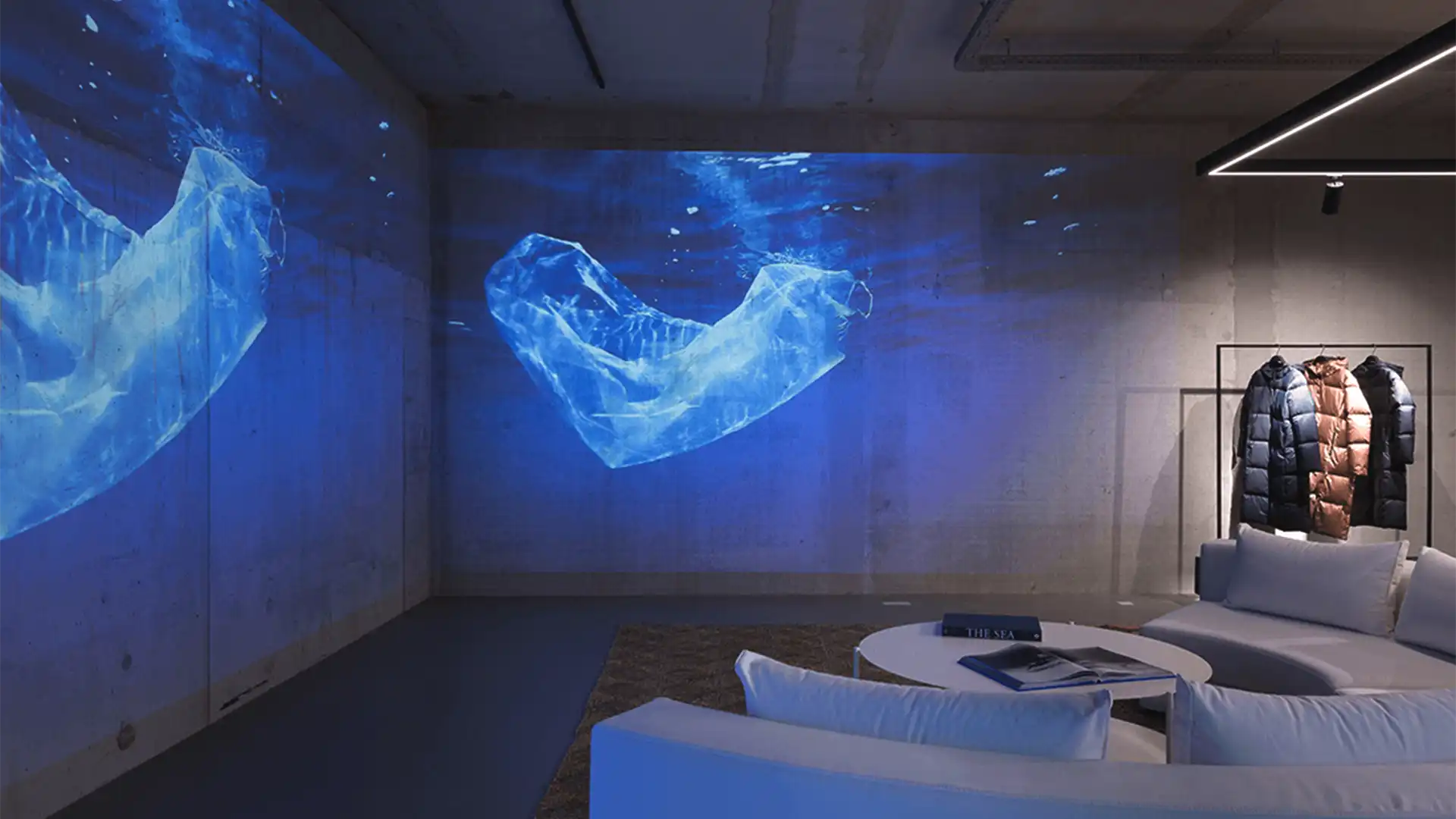
TRISON integrated digital displays across Ecoalf’s flagship stores in Berlin and Madrid, embedding technology into the furniture to keep sustainability at the centre of the brand experience.
Technology in a sustainable retail environment cannot compete with the brand — it must disappear into it. Ecoalf needed screens and totems that would support its visual storytelling without drawing attention to the hardware itself. The solution had to feel invisible, while the content remained central.
Embedding the hardware directly into the furniture was the defining decision. By integrating screens into columns, shelving units and window structures, the technology became part of the architecture. Content — not equipment — would become the visible bridge between Ecoalf’s production process and the customer standing in the store.
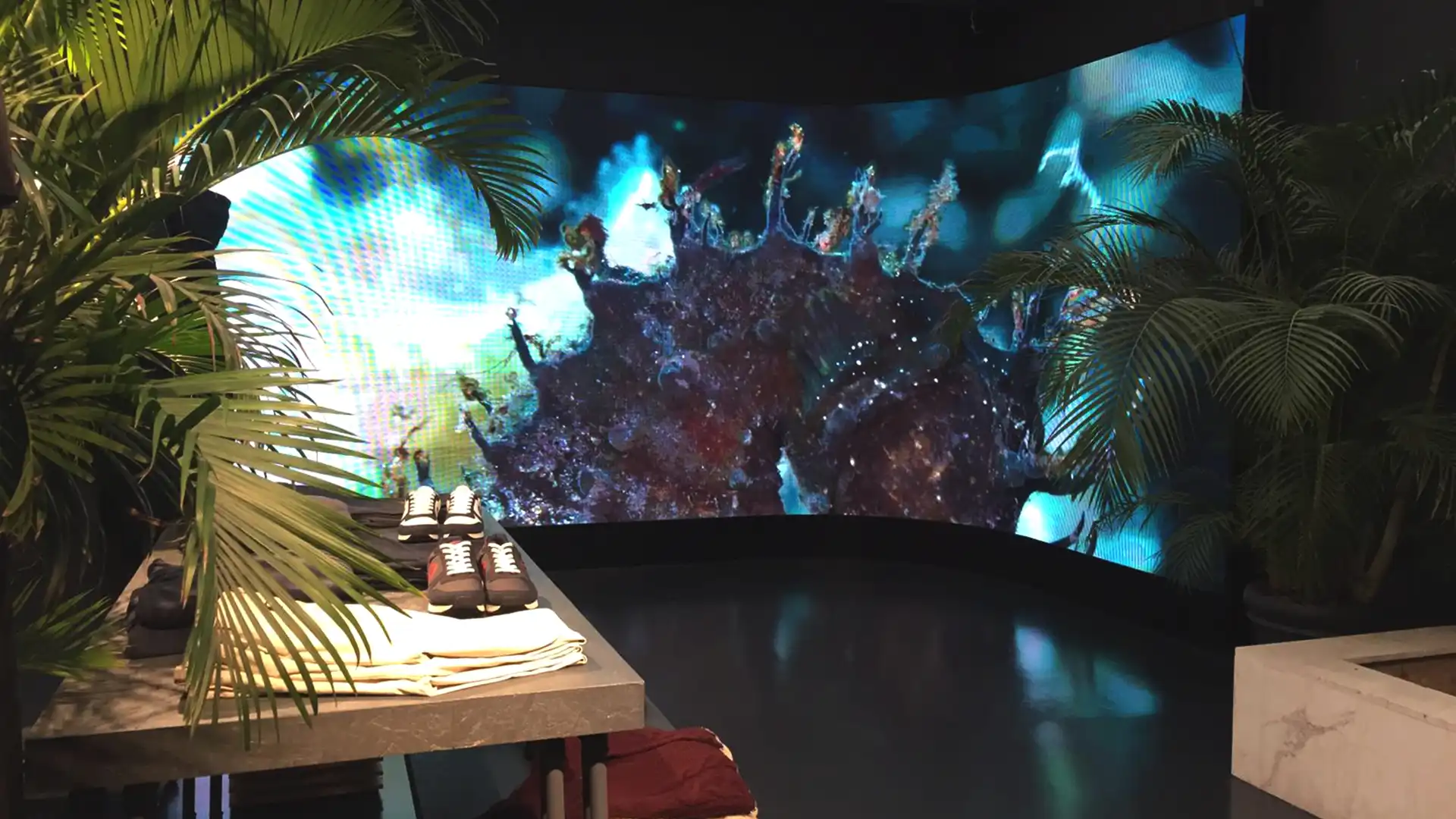
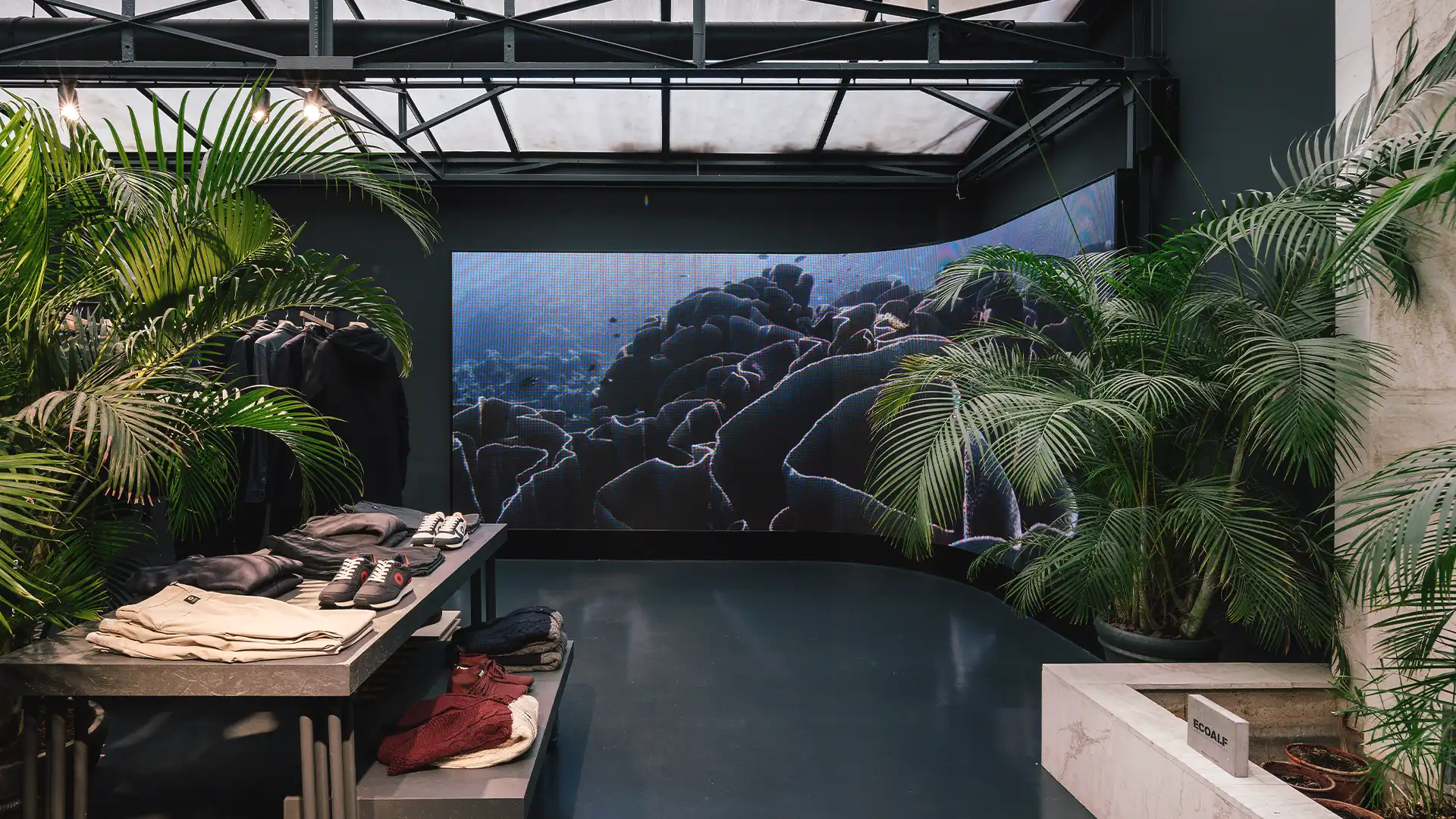
Madrid store features a curved high-brightness LED and marine projections that immerse customers in the brand’s ocean protection mission.
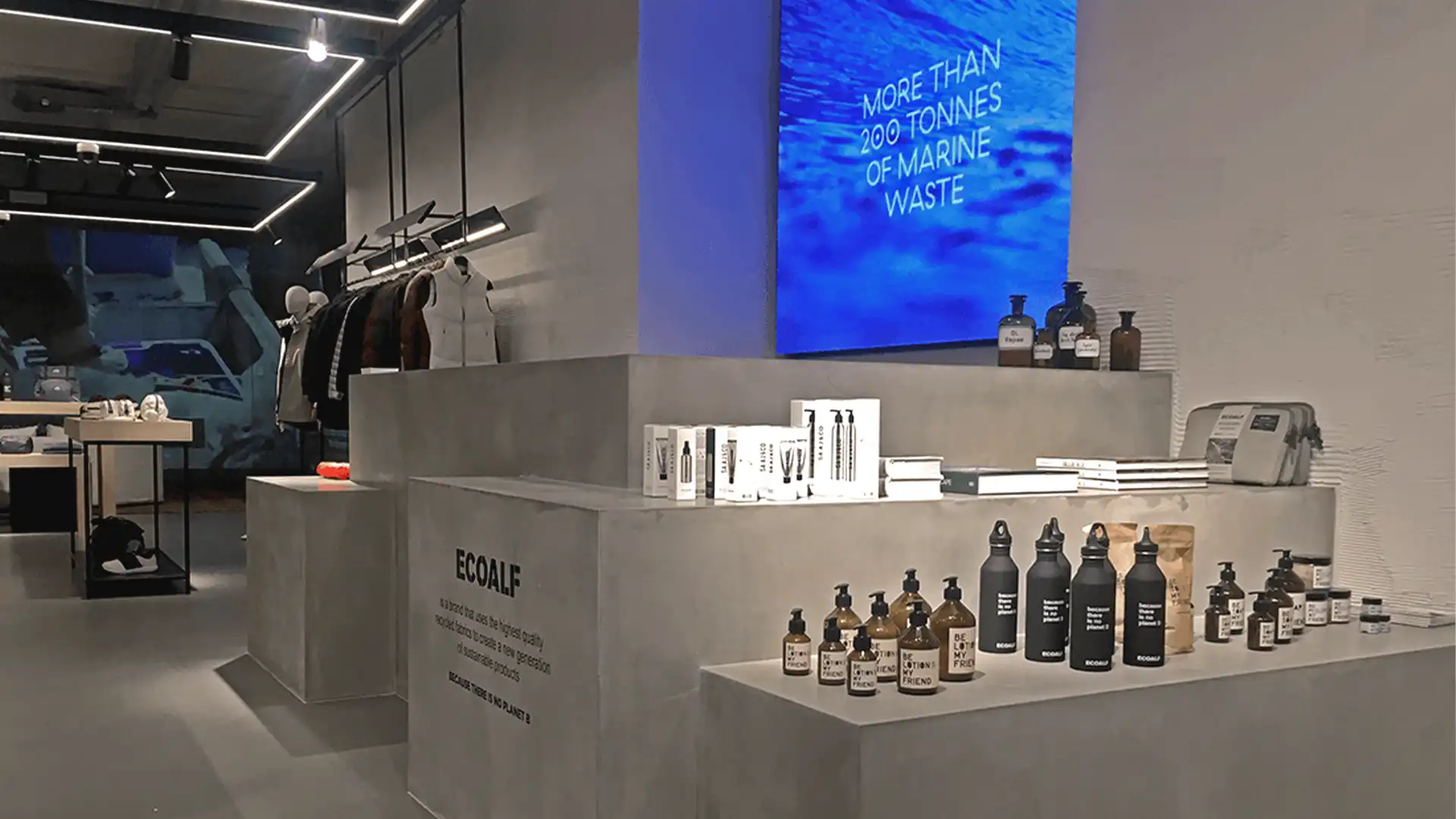
Totems, screens, and digital signage blend discreetly into architecture and furniture, respecting Ecoalf’s minimalistic design ethos.
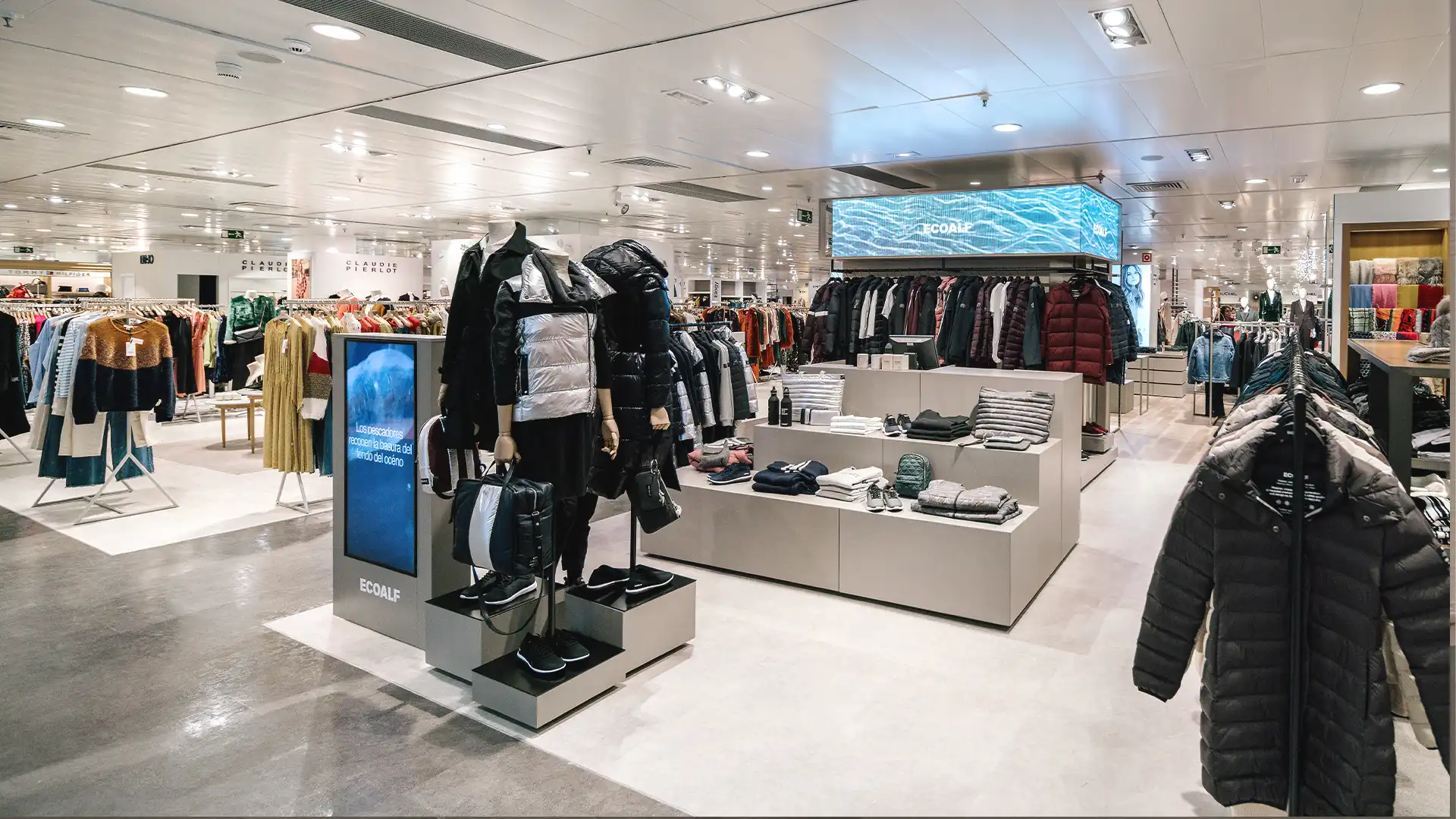
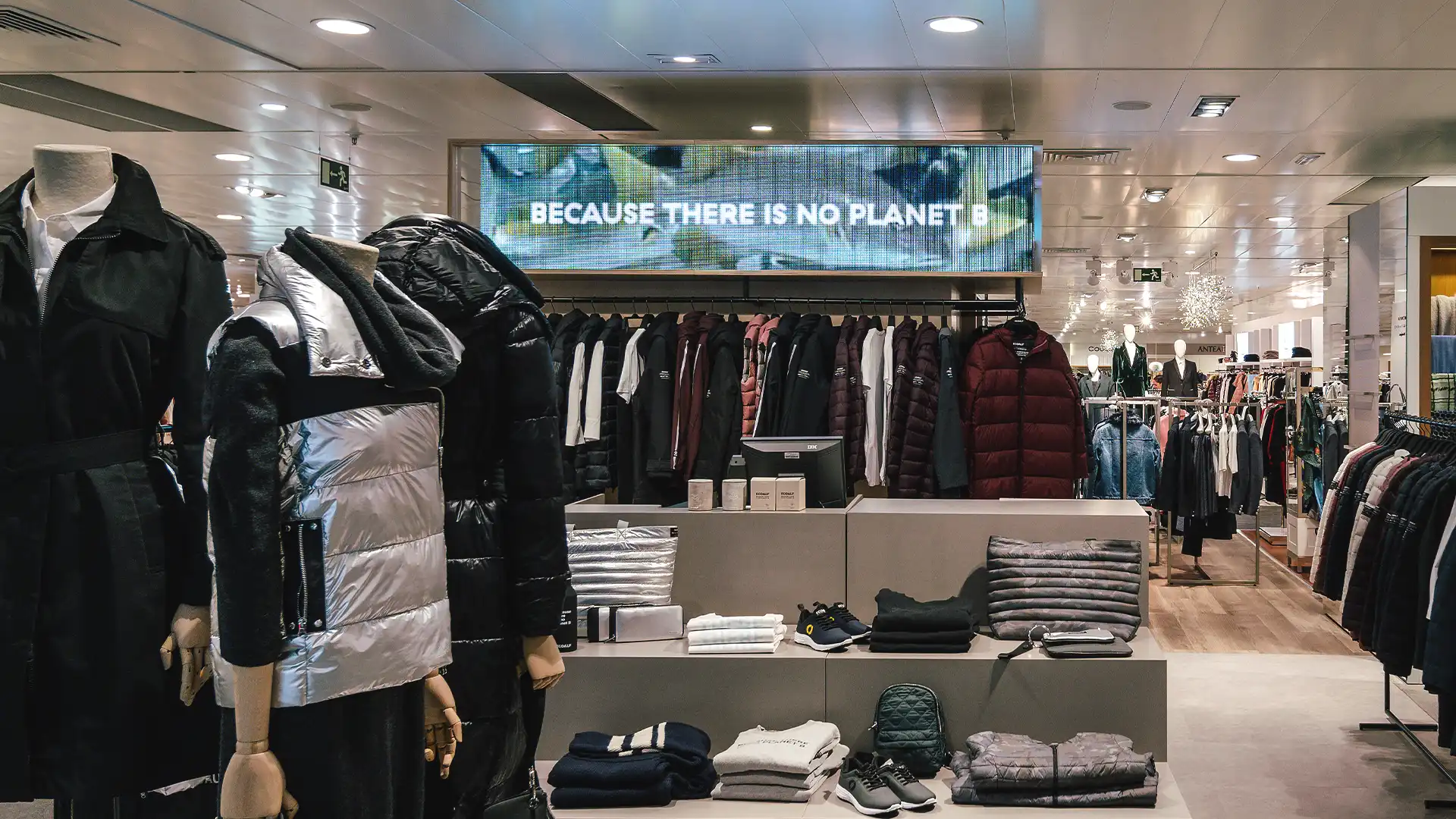
Upper LED screens and column-integrated displays increase visibility and differentiate Ecoalf corners in department stores.
Every installation reinforces Ecoalf’s commitment to sustainability, using digital tools to communicate environmental values with clarity and emotion.
 GET IN TOUCH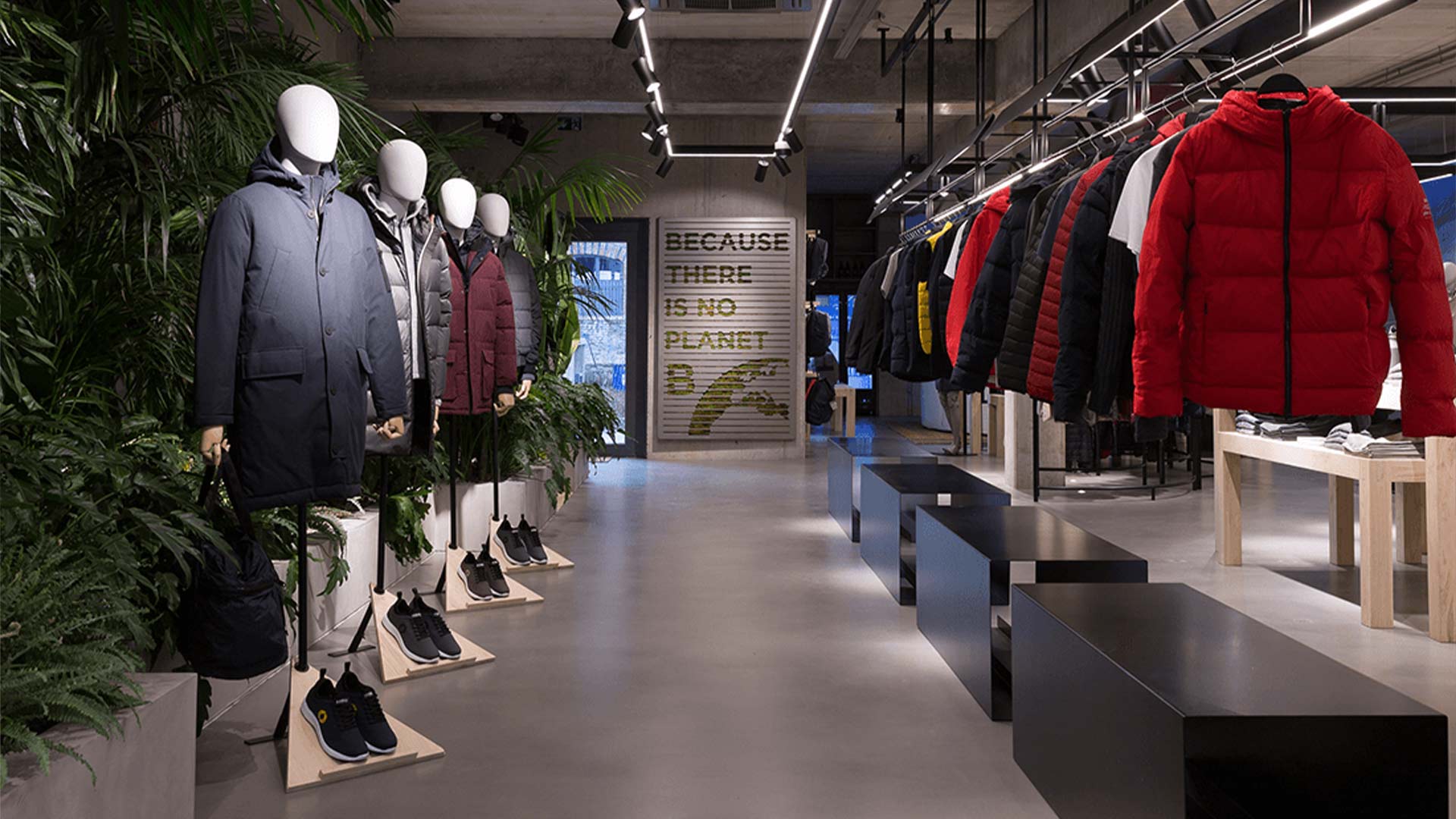
For Ecoalf’s first international flagship store in Berlin, TRISON installed rotating totems in the shop window, a large-format LED screen on the main floor, and an additional display embedded directly into a column that also serves as a bottle rack. Each installation was designed to remain structurally invisible. As a result, the content — showing the journey from recovered plastic to finished garment — plays without interruption against the brand’s interior concept.
In Madrid, Ecoalf selected Calle Hortaleza for its showroom — an open-plan space where sustainable fashion meets a high-design interior. At the rear of the space, a large curved LED screen spans the full width below a skylight. The screen displays underwater content — fish, seaweed, ocean movement — creating an immersive atmosphere that contrasts deliberately with the urban environment outside. The audio layer completes the sensory context, reinforcing the brand’s environmental message at the point of purchase.
Every display shows the process behind each item — where materials come from, how they are recovered, and what they become.
GET IN TOUCH