Subscribe to our newsletter
Thank you for subscribing! 
 Madrid, Spain
The Madring F1 experience brought Formula 1 to the streets of Madrid for the first time — with large-format LED, immersive audio and a holographic installation that stayed at IFEMA long after race day.
The Madring roadshow took Formula 1 into the streets of Madrid for the first time. The live urban circuit spread across multiple viewing areas throughout the city. Because of this, the challenge was clear: over 80,000 attendees needed to follow every moment with the same energy, no matter where they stood.
TRISON designed an integrated audiovisual infrastructure across the full circuit. First, large-format LED screens went up at key viewing points along the route. Then, immersive audio systems covered the entire circuit, and dedicated AV support served VIP areas throughout the event. In addition, the activation extended beyond race day — through a permanent holographic installation at IFEMA that kept the Formula 1 presence alive in Madrid long after the roadshow ended.


A holographic Carlos Sainz, permanent at IFEMA — Formula 1 energy that outlasts the event.
 GET IN TOUCH
TRISON placed large-format LED screens at key viewing points along the Madring circuit, so every section of the crowd had clear visibility of the live action. Immersive audio systems covered the full route, carrying the energy of the race across the city. For VIP areas, TRISON deployed dedicated AV infrastructure with synchronised content and broadcast feeds throughout the event.

TRISON deployed a Holobox in the event area at IFEMA, displaying Carlos Sainz as full-body holographic content at human scale. As a result, fans and visitors could engage with driver content outside of the live roadshow. This same holographic format was also part of the Formula 1 Barcelona experience. After the event, the Holobox remained at IFEMA as a permanent installation. In this way, the Madring F1 experience continued in Madrid long after race weekend ended.
Watch two large-format LED displays take shape at IFEMA Madrid, from structural build to a fully operational permanent installation.
GET IN TOUCHAlong Pavilion 12, TRISON built a curved LED wall that follows the building’s own perimeter instead of sitting as a flat screen against it. The display wraps the pavilion’s curve, giving the venue a continuous line of content visible from the circuit side. Automatic brightness control and redundant display systems keep it readable and running consistently across every session of a race weekend.

TRISON integrated a transparent LED display into IFEMA Madrid’s south facade, combining a large-format screen with an unobstructed view through the glass. The display stays visible from sections of the Madring circuit, so the facade keeps working as architecture while gaining a permanent communication surface. As a result, race-day content can sync with the circuit’s rhythm without altering the building’s silhouette. For a closer look at the installation at full detail, watch the complete timelapse.
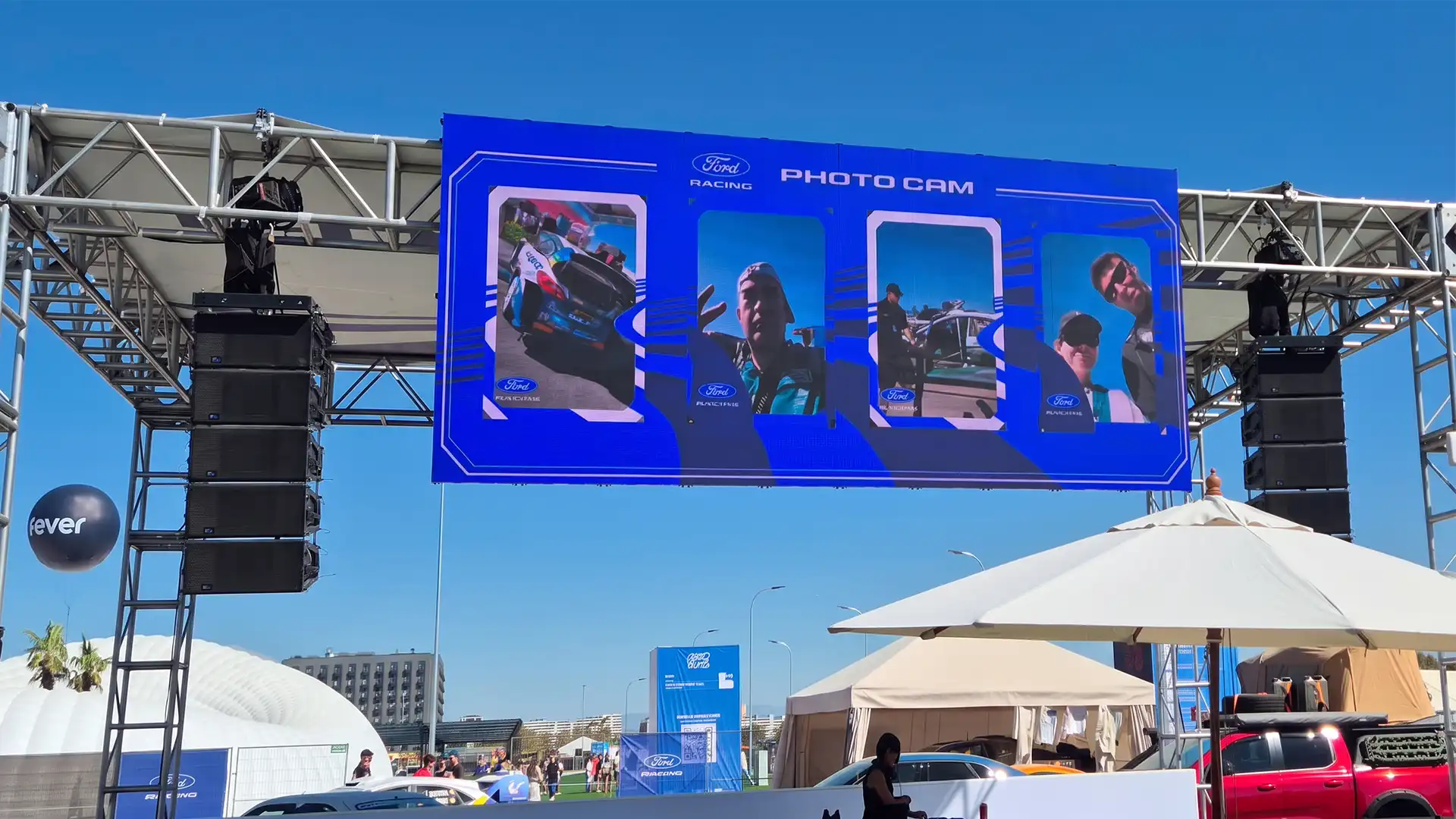
For the circuit’s first race weekend, TRISON YellowBricks brought the Ford Racing Fan Zone to life with a digital experience built around #UFAN, a single web app fans opened straight from their phone.
2,950 fans signed up, and 76% played at least once — moving through games, simulator bookings, quizzes and rally circuit challenges, and earning 592,587 points between them, with 530 prizes redeemed.
UFAN also ran the fan zone’s photocams, generating more than 300 AI-driven portraits that placed fans inside a Ford Racing legend from another era.
On the rally and off-road circuit Ford set up, robotic cameras and cameras mounted inside the vehicles let both the drivers — including Carlos Sainz — and the spectators around the track follow every run from inside the car.
A 13-person TRISON YellowBricks team ran the operation throughout the event, covering live production, camera operation, screen control and sound engineering.